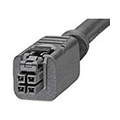
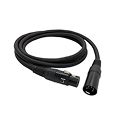
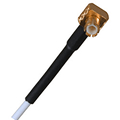
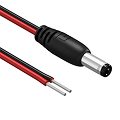
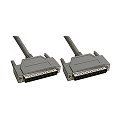
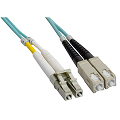
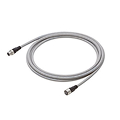
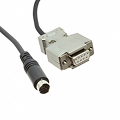
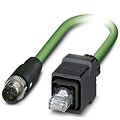
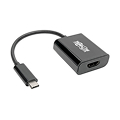
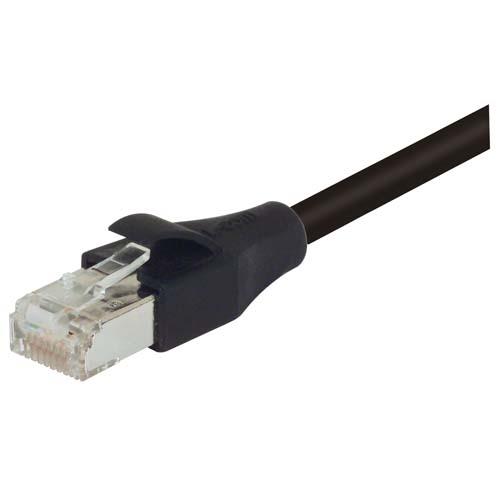
Cable assemblies bundle cables and connectors into a single, ready-to-install part. Engineers can route power, data, and signals without cutting, stripping, or terminating anything in the field. For Interconnect, Passive, and Electromechanical (IP&E) builds, that translates to faster assembly, fewer wiring errors, and cleaner cabinets. Online Components stocks these parts in the U.S. and ships them quickly.
You'll find AC power assemblies, DC power assemblies, audio/video, coaxial, D-sub, fiber optic, flat/ribbon, and metric configurations here. When matching a part to a panel or enclosure, check conductor size, insulation type, shielding, connector style, length, and the relevant electrical or temperature ratings.
How to Choose the Right Cable Assembly
Start with what the run actually carries. Power paths call for AC or DC assemblies sized to the load and cable length. Signal circuits, especially noise-sensitive ones, work better with coaxial, fiber optic, or audio/video options. If your design uses ribbon headers or D-sub connectors, flat/ribbon and D-sub assemblies will match up cleanly.
Think about the physical environment, too. In tight spaces or sections that move, use flexible cables with proper strain relief. Gear that sees vibration or frequent handling benefits from rugged jackets and secure latching. It's worth comparing ratings against your own safety, regulatory, and performance targets so the assembly holds up across the product's full service life.
Popular Applications for Cable Assemblies
Engineers and purchasing teams reach for cable assemblies when they need consistent, repeatable connections across multiple builds. One finished part replaces the work of cutting and terminating individual conductors, and it already matches the connector and pinout. That shortens assembly time, simplifies quality checks, and gives production a single part number to track.
AC and DC power assemblies typically feed machinery, control panels, and distribution units. Audio/video and coaxial versions carry signals in communication systems, broadcast rigs, and test equipment. D-sub and flat/ribbon assemblies link modules, boards, and backplanes. Fiber-optic and metric styles support higher-speed paths and compact industrial interfaces.
Why Buy Cable Assemblies from Online Components?
Online Components keeps cable assemblies in U.S. inventory so that production teams can source parts fast. Stock comes through authorized channels, which means full traceability. Our site lets you filter by subtype, connector, rating, and length, and checkout moves quickly, whether you're ordering five pieces or 500. Our support team can answer questions on specs and logistics, and flat shipping rates help keep your total cost predictable.
Cable Assemblies: What You Need to Know
What is a cable assembly?
A finished cable with connectors already attached, shipped as one ready-to-install part.
How is a cable assembly different from bulk wire?
Bulk wire requires separate connectors and termination work. A cable assembly arrives pre-terminated and ready to plug in.
When should I use coaxial or fiber optic cable assemblies?
These handle high-frequency, long-distance, or noise-sensitive signals where controlled geometry and shielding matter most.
What matters most when selecting a cable assembly?
Connector type, length, ratings, shielding, and mechanical durability all factor into whether a part fits your electrical plan and physical layout.
Can cable assemblies be used in regulated equipment?
Yes, but your engineering team should qualify them through testing and confirm the ratings align with project and regulatory requirements.
 contact us
 English
 Chinese
 Italiano
 Portuguese
 Deutschland
 French
 Russian
 Japanese
 Turkish
 Korean
 Spanish